
Health Foods: What to Know Before You Buy

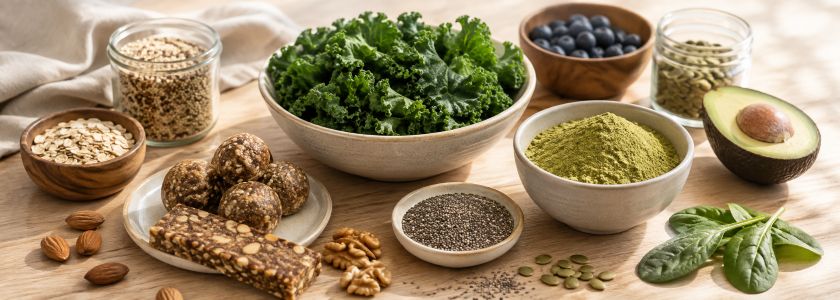
“Health foods” is a broad retail category rather than a single type of food. It can include superfoods, greens powders, snack products, functional foods, pantry ingredients and other products marketed for everyday nutrition.
Because products in this category can be very different from one another, the most useful way to compare them is to look beyond the category name and check the ingredient list, Nutrition Information Panel, serving size, product format and any nutrition or health claims made on the label.
What Does “Health Food” Mean?
“Health food” is not a single nutritional classification. A product may be placed in a health-food category because of its ingredients, positioning, format or intended use, but that does not automatically mean it is nutritionally superior to every conventional food.
A better comparison starts with what the product actually contains and how it fits into your overall diet.
Start With the Product Type
Health-food ranges can include very different products, such as:
- superfood powders and blends;
- greens powders;
- nutrition powders and meal-style products;
- protein or snack products;
- functional beverages;
- seeds and plant-based pantry ingredients;
- specialty oils; and
- other packaged foods marketed around nutrition or lifestyle positioning.
These products should not all be compared using the same criteria. A greens powder, snack bar and pantry ingredient serve different purposes and can have very different nutrition profiles.
For a more focused comparison of superfood products, see the Superfoods Guide once available.
Check the Ingredient List
The ingredient list tells you what the product is actually made from.
Ingredients on packaged foods are generally listed in descending order by weight, meaning the ingredient present in the greatest amount appears first.
When comparing health foods, check:
- the first few ingredients;
- whether the product is based on whole-food ingredients, powders, extracts or concentrates;
- whether sugars, sweeteners, oils or flavouring ingredients are present;
- whether vitamins, minerals or other nutrients have been added;
- whether the product contains multiple blends or proprietary-style mixtures; and
- allergen declarations and advisory information where relevant.
Use the Nutrition Information Panel
Most packaged foods in Australia carry a Nutrition Information Panel, often called an NIP.
Food Standards Australia New Zealand states that the standard panel provides average quantities of:
- energy;
- protein;
- fat;
- saturated fat;
- carbohydrate;
- sugars; and
- sodium.
Other nutrients may also appear when relevant to a claim or product formulation.
The panel normally shows values both per serving and per 100 g, or per 100 mL for liquids.
For detailed label-reading guidance, see the upcoming How to Read a Nutrition Information Panel Guide.
Per Serving vs Per 100 g
Both columns are useful, but they answer different questions.
Per serving shows what the manufacturer-defined serving provides.
Per 100 g or 100 mL provides a consistent basis for comparing products with different serving sizes.
When comparing two similar products, the per-100 g or per-100 mL column can make it easier to compare nutrient density directly.
However, the serving column is still important because it shows how much you are likely to consume at one time according to the stated serving size.
Check the Serving Size Carefully
A smaller serving can make the per-serving amount of energy, sugar, sodium or fat appear lower, even when the product is not lower in those nutrients on an equivalent-weight basis.
Check:
- the stated serving size;
- how many servings are in the package;
- whether your likely portion matches the stated serving;
- the per-100 g or per-100 mL values; and
- whether preparation instructions change the final nutrition values.
Our planned Understanding Serving Sizes on Food Labels Guide will cover this in more detail.
Look Beyond a Single Nutrient
A product should not usually be judged by one nutrient in isolation.
For example, a product can be relatively high in protein but also contain substantial energy, saturated fat, sodium or sugars. Likewise, a low-sugar product can still differ considerably in ingredient quality, fibre, energy density and overall formulation.
Compare the complete nutrition profile and ingredient list rather than focusing only on the nutrient highlighted most prominently on the front of the pack.
Superfoods Are Still Foods
The term “superfood” is commonly used for foods or food ingredients that are positioned as nutrient-dense or distinctive, but it is not a separate food group.
Australian dietary guidance focuses on eating a wide variety of nutritious foods across the five food groups rather than relying on individual ingredients to provide an overall healthy diet.
Superfood powders and blends can be convenient additions to a diet, but they should be assessed on their actual ingredients, nutrition information, serving size and intended use.
Greens Powders and Blended Nutrition Products
Greens powders vary considerably. Some are dominated by vegetable, grass or algae powders, while others combine these ingredients with fruit powders, herbs, vitamins, minerals, fibre, enzymes or other components.
A short ingredient list and a long multi-ingredient blend are not directly equivalent.
When comparing greens powders, consider:
- which ingredients are actually present;
- their order in the ingredient list;
- serving size;
- added nutrients;
- sweeteners and flavours;
- allergen information; and
- whether individual ingredient quantities are disclosed.
The Greens Powders & Superfood Blends Guide will provide a more detailed comparison.
Snacks and Bars Need the Same Label Checks
Products sold as protein bars, nutrition snacks or functional snacks can differ substantially in ingredients and nutrition profile.
Useful comparisons include:
- protein per serving;
- energy per serving;
- sugars;
- saturated fat;
- sodium;
- fibre where declared;
- serving size; and
- the main ingredients used to make the product.
Front-of-pack wording should be checked against the detailed label rather than treated as a complete nutritional summary.
Understand Nutrition and Health Claims
Food labels can include nutrition content claims and health claims.
Food Standards Australia New Zealand distinguishes between:
- nutrition content claims, which describe the amount or presence of a nutrient or substance in a food; and
- health claims, which describe a relationship between a food or nutrient and a health effect.
Claims must meet requirements under the Australia New Zealand Food Standards Code. Health claims must also be supported by scientific evidence and meet applicable eligibility requirements.
However, a compliant claim does not mean that the product should be judged only by that claim. Check the complete ingredient list and Nutrition Information Panel as well.
“Natural”, “Organic” and Similar Words Do Not Replace Label Reading
Marketing terms can influence how a product is perceived, but they do not replace the nutrition panel or ingredient list.
When you see words such as “natural”, “organic”, “plant-based”, “high protein”, “no added sugar” or similar descriptions, check what the wording actually refers to and compare the underlying product information.
The planned Understanding Nutrition and Food Claims Guide will explain common label claims in more detail.
Check Sugars Carefully
The sugars line in the Nutrition Information Panel shows total sugars, but it does not by itself explain where those sugars come from.
The ingredient list can help identify ingredients that contribute sugars, while front-of-pack claims may provide additional information subject to food-labelling rules.
For comparisons, consider both the sugars value and the overall ingredient list rather than relying on one number alone.
Check Sodium as Well as Salt-Related Wording
Australian Nutrition Information Panels declare sodium rather than simply listing “salt” as the nutrition value.
Products that appear similar can have quite different sodium levels, so check the per-serving and per-100 g or per-100 mL values when sodium is relevant to your comparison.
Consider the Role the Product Will Play
A health-food product can be used as:
- a pantry ingredient;
- a snack;
- a drink ingredient;
- a powdered nutrition product;
- a convenient addition to meals; or
- a specialist food product.
How you compare it should depend partly on that intended role.
For example, comparing a snack bar with a greens powder based only on protein or energy would not provide a particularly useful comparison because the products are designed for different uses.
Health Foods and an Overall Diet
No individual packaged food or powder determines the quality of an overall diet.
Australian dietary guidance recommends eating a wide variety of nutritious foods from the five food groups and limiting discretionary foods that are high in saturated fat, added sugars, added salt or alcohol.
Health-food products can fit within different dietary patterns, but they should be considered alongside the rest of the foods and drinks consumed over time.
A Practical Health Foods Buying Checklist
- What type of product is it? Compare it with products intended for a similar use.
- What are the main ingredients? Read the ingredient list rather than relying on the product name.
- What is the serving size? Check whether the stated serving reflects how you are likely to use the product.
- What does the Nutrition Information Panel show? Review energy, protein, fat, saturated fat, carbohydrate, sugars and sodium.
- Can you compare per 100 g or 100 mL? This can help when serving sizes differ.
- Are other nutrients declared? Check fibre, vitamins, minerals or other nutrients where relevant.
- What claims are being made? Verify front-of-pack wording against the detailed label.
- Are there allergens or dietary restrictions to consider? Check the current package carefully.
- Is the product a single ingredient or a blend? Multi-ingredient products can be harder to compare directly.
- Does the product suit its intended role in your diet? Compare like with like wherever possible.
Frequently Asked Questions
Is “health food” an official nutrition category?
No. It is a broad retail and marketing category. Products grouped as health foods can differ substantially in ingredients, nutrition profile and intended use.
Does being sold in a health-food category mean a product is automatically healthy?
No. The category alone does not determine nutritional quality. Check the ingredient list, Nutrition Information Panel, serving size and complete product information.
What should I compare first on a packaged health food?
Start with the product type, ingredient list and serving size, then review the Nutrition Information Panel and any claims made on the label.
Should I compare products per serving or per 100 g?
Both can be useful. Per-serving values show what the stated serving provides, while per-100 g or per-100 mL values can make it easier to compare similar products with different serving sizes.
Are superfoods a separate food group?
No. “Superfood” is a commonly used term rather than a separate food group under Australian dietary guidance.
Does “no added sugar” mean a product contains no sugar?
Not necessarily. A product can contain naturally occurring sugars even when no sugar has been added. Check the Nutrition Information Panel, ingredient list and the exact wording of the claim.
Does a high-protein claim tell me everything about a product?
No. Protein is only one part of the nutrition profile. Also review energy, saturated fat, carbohydrate, sugars, sodium, serving size and ingredients.
Are health claims on food labels regulated?
Yes. In Australia and New Zealand, nutrition content and health claims are subject to requirements in the Food Standards Code. Health claims must be supported by scientific evidence and meet applicable regulatory criteria.
Further Information
- Food Standards Australia New Zealand — Nutrition Information Panels
- Food Standards Australia New Zealand — Nutrition Content Claims and Health Claims
- Eat For Health — Food Essentials
- Eat For Health — Choosing Nutritious Foods
Important Information
This guide provides general information to help compare health foods, including superfoods, greens powders, snack products, functional foods and other packaged nutrition products. It is not intended to provide personalised dietary or medical advice and does not replace advice from an appropriately qualified health professional.
Individual dietary needs vary according to factors such as age, life stage, activity level, medical conditions, allergies, intolerances and overall dietary pattern. If you have specific nutrition requirements, a medical condition, food allergy or intolerance, or need personalised dietary advice, speak with an appropriately qualified health professional.
Always check the current ingredient list, allergen information, Nutrition Information Panel, serving size, preparation directions and any warnings on the individual product.
Product formulas, directions and warnings can change. Always check the current product label before purchase and use.