
Herbal Combination Formulas: What to Know Before You Buy

Herbal combination formulas can include several botanical ingredients in one product, sometimes alongside vitamins, minerals or other nutrients. These formulas can be convenient, but they can also be more difficult to compare because the same familiar herb may appear in very different amounts, forms and combinations from one product to another.
This guide explains how to compare herbal combination formulas by looking at the complete ingredient list, ingredient amounts, extract forms, serving sizes, overlapping ingredients, product purpose and current label information before choosing.
What Is a Herbal Combination Formula?
A herbal combination formula contains more than one active herbal ingredient. Some products combine two or three botanicals, while others include a much broader mixture of herbs and additional nutrients.
Combination formulas may be designed around a particular product purpose, but the product name alone does not tell you which ingredients are present in meaningful amounts.
You can browse the current Herbal Supplements range to see how single-herb and combination products differ.
Start With the Complete Active Ingredient List
The first step is to identify every active ingredient rather than focusing only on the ingredient highlighted on the front of the pack.
When comparing formulas, check:
- all herbal ingredients;
- the amount of each ingredient per recommended serving;
- the botanical species where stated;
- the plant part used;
- whether each ingredient is whole herb, powder or extract;
- any standardised constituent information; and
- any vitamins, minerals or other active ingredients included.
If you want more background on botanical names, plant parts and extract terminology, see the Herbal Supplements Guide.
How Prominent Is the Ingredient You Are Interested In?
An herb can be the main ingredient in one formula and a minor supporting ingredient in another. This is one of the most important differences between dedicated supplements and combination products.
For example, a formula may feature ashwagandha, curcumin, ginseng or another herb on the front label while combining it with several other active ingredients.
Check the actual amount provided in the full recommended serving rather than assuming the named ingredient is the dominant component.
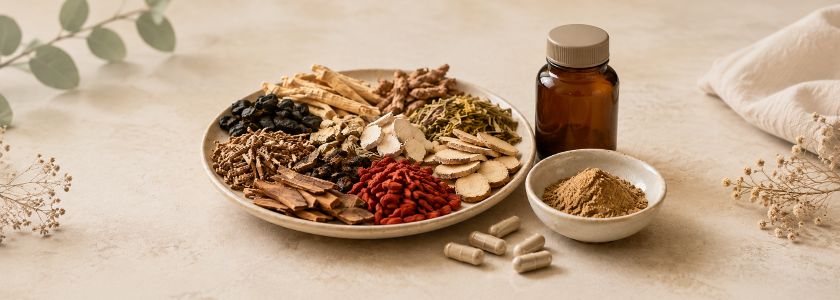
Single-Herb Products and Combination Formulas Serve Different Purposes
A single-herb supplement usually provides a simpler ingredient profile and makes it easier to identify how much of one botanical is being supplied.
A combination formula brings several ingredients together in one product. This may suit customers who prefer a broader formula, but it also requires closer comparison.
Neither type is automatically better. The important question is whether the formula is clear, appropriately labelled and suitable for what you are trying to compare.
Compare the Full Recommended Serving
Multi-ingredient formulas often require more than one capsule, tablet, scoop or millilitre per serving.
Check:
- how many units make up one serving;
- how many servings are recommended per day;
- the amount of each active ingredient in the complete serving;
- whether the label shows per-unit or per-serving amounts; and
- whether directions vary according to the intended use.
Do not compare one capsule from one product with the full daily serving from another.
Whole Herbs and Extracts Can Appear in the Same Formula
Combination products may include whole or powdered herbs alongside concentrated extracts.
These forms should not be compared only by their milligram amounts. A smaller quantity of concentrated extract may represent a larger quantity of original plant material.
Labels may show:
- the actual amount of extract;
- an equivalent amount of dry or fresh herb;
- an extraction ratio; or
- a standardised constituent amount.
Use the full declaration rather than choosing whichever product displays the largest number.
Check for Repeated Herbs Across Different Products
One of the main risks with combination formulas is ingredient duplication.
The same herb may appear in:
- a dedicated single-herb supplement;
- a broader herbal blend;
- a multivitamin or mineral product;
- a stress, energy or wellness formula; or
- another combination supplement you already use.
Before combining products, compare the complete active ingredient lists and serving amounts.
Check for Overlap Beyond Herbs
Combination formulas can also include vitamins, minerals, amino acids or other active ingredients.
For example, a herbal formula may also contain magnesium, zinc, B vitamins or other nutrients that are already present in another supplement.
Check the whole formula rather than reviewing the herbal ingredients in isolation.
Combination Formulas Can Be Harder to Compare
Two products marketed for a similar purpose may use completely different ingredient combinations.
One may contain several herbs in modest amounts, while another may use fewer ingredients in more concentrated forms.
This means that front-label positioning or the number of ingredients should not be used as a shortcut for quality or suitability.
Compare:
- which ingredients are included;
- how much of each ingredient is supplied;
- the extract or plant form used;
- the complete serving size; and
- the warnings and directions.
More Ingredients Does Not Automatically Mean a Better Formula
A long ingredient list may look comprehensive, but the number of ingredients alone does not tell you how useful or appropriate a formula is.
A product with fewer ingredients may provide clearer amounts and easier comparison. A broader blend may suit another customer who prefers multiple ingredients in one product.
Judge the formula on transparency, ingredient forms, serving information and suitability rather than ingredient count alone.
Look for Botanical Names and Plant Parts
Common herb names are useful, but the botanical name can provide more precise information about the species used.
Plant part also matters. Depending on the herb, products may use root, leaf, bark, seed, flower, fruit, rhizome or another botanical component.
Two combination formulas may therefore contain the same common herb name but use different botanical preparations.
Understand Standardised Herbal Extracts
Some herbal extracts are standardised to provide a specified amount or proportion of selected constituents.
When this information is provided, check whether it refers to:
- the extract itself;
- the amount per capsule or tablet;
- the amount per complete serving; or
- the finished product.
A higher standardised percentage does not automatically make one product preferable. It is only one characteristic of the complete formula.
Check the Dosage Form
Herbal combinations are available in capsules, tablets, powders and liquids.
The dosage form can affect convenience and serving instructions, but it does not by itself tell you the concentration or quality of the formula.
For more detail on solid formats, see the Herbal Capsules, Tablets & Powders Guide.
For liquid preparations, see the Herbal Tonics & Extracts Guide.
Understand AUST Numbers Where Applicable
Many herbal combination products supplied as medicines in Australia are included in the Australian Register of Therapeutic Goods.
Medicine labels may display:
- AUST L — listed medicine;
- AUST L(A) — assessed listed medicine; or
- AUST R — registered medicine.
These pathways have different regulatory requirements. The identification number helps establish how the product is regulated but does not tell you whether the combination formula is suitable for you.
Check Warnings Carefully
Combination formulas can contain several active ingredients, which means there may be more potential for warnings, contraindications or interactions.
Always read:
- the full warning panel;
- age restrictions;
- pregnancy or breastfeeding advice;
- medicine interaction warnings;
- allergen information where relevant; and
- directions for use.
If you use medicines, have a medical condition, are pregnant or breastfeeding, are preparing for surgery, or are uncertain whether a combination formula is suitable for you, speak with a pharmacist, doctor or other appropriately qualified health professional before use.
A Practical Herbal Combination Formula Buying Checklist
- Which ingredients are actually included? Read the complete active ingredient list.
- How much of each herb is provided? Check the full recommended serving.
- Is the highlighted herb really the main ingredient? Do not rely on front-label emphasis alone.
- Are ingredients whole herbs or extracts? Compare like with like where possible.
- Are equivalent herb amounts shown? Distinguish them from the physical extract amount.
- Are standardised constituents stated? Consider these in the context of the full formula.
- Are vitamins or minerals included too? Check for non-herbal ingredient overlap.
- Do any ingredients repeat across other supplements? Review everything you currently use.
- What is the complete serving size? Compare full daily amounts rather than single units.
- What warnings apply? Always read the current product label.
Frequently Asked Questions
What is a herbal combination formula?
It is a supplement containing more than one herbal active ingredient. Some formulas also include vitamins, minerals or other nutrients.
Are combination herbal formulas better than single-herb supplements?
Not necessarily. Single-herb products provide a simpler ingredient profile, while combination formulas include several active ingredients. The better comparison is whether the ingredients, amounts, directions and warnings suit your needs.
Does more ingredients mean a stronger product?
No. Ingredient count does not indicate strength. A product can contain many ingredients in small amounts or fewer ingredients in more concentrated forms.
How can I tell how much of the main herb is included?
Check the active ingredient panel and the amount supplied in the full recommended serving. Do not rely only on the product name or the herb highlighted on the front label.
Can different products contain the same herb?
Yes. Herbs can appear across dedicated supplements, combination formulas and broader wellness products. Check for repeated ingredients if you use several supplements.
Can herbal combination formulas interact with medicines?
Yes. Individual herbs and other active ingredients may interact with medicines or be unsuitable in certain circumstances. Seek advice from an appropriately qualified health professional if you use medicines or have concerns about a formula.
Should I compare formulas by the number of ingredients?
No. Compare the identity, amount and form of each ingredient, complete serving size, directions and warnings rather than ingredient count alone.
Further Information
- Therapeutic Goods Administration — Understanding Complementary Medicines
- Therapeutic Goods Administration — Herbal Ingredients
- Therapeutic Goods Administration — What's on My Medicine Label?
- National Center for Complementary and Integrative Health — How Herbs Can Interact With Medicines
Important Information
This guide provides general information to help compare herbal combination formulas, including ingredient amounts, extracts, serving sizes and product labels. It is not intended to diagnose, treat, cure or prevent a medical condition and does not replace advice from a qualified health professional.
Herbal and complementary medicines can cause side effects and may interact with prescription medicines, over-the-counter medicines and other supplements. Combination formulas may contain multiple active ingredients, increasing the importance of checking for duplication and potential interactions.
If you take medicines, have a medical condition, are pregnant or breastfeeding, are preparing for surgery, or are uncertain whether a product is suitable for you, speak with an appropriately qualified health professional before use.
Always follow the directions and warnings on the individual product label. Do not assume that combination products containing the same highlighted herb have the same ingredient amounts, extracts, serving size or suitability.
Product formulas, directions and warnings can change. Always check the current product label before purchase and use.