
Herbal Tonics & Extracts: What to Know Before You Buy

Herbal tonics and extracts are liquid botanical products that can differ considerably in ingredient concentration, extraction method, serving size and whether they contain a single herb or a combination formula. A small serving volume does not automatically mean a product is stronger, and a large equivalent-herb number does not necessarily make one extract directly comparable with another.
This guide explains how to compare herbal tonics and extracts by looking at botanical identity, plant part, extraction ratios, solvents, equivalent amounts, serving information, combination formulas and current product labels before choosing.
What Are Herbal Tonics and Extracts?
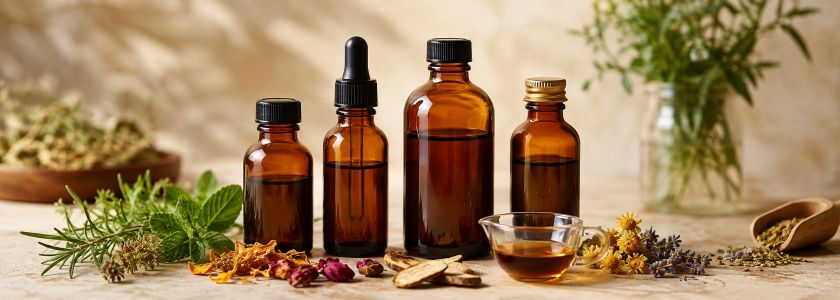
Herbal tonics and extracts are liquid preparations containing ingredients derived from botanical material. Depending on the product, they may use fresh or dried herbs and may contain one herbal ingredient or a combination of several botanicals.
You can browse the current Herbal Tonics & Extracts range to see how formulas, serving sizes and liquid preparations differ.
The terms used on product labels can vary. You may see words such as extract, liquid extract, tincture, tonic, concentrate, infusion or another preparation description. These terms should be interpreted using the detailed ingredient and serving information rather than the product name alone.
Start With the Botanical Ingredient
Before comparing liquid volume or extract ratios, identify the herb itself. Look for the botanical species, plant part and preparation stated in the active ingredient declaration.
The Therapeutic Goods Administration notes that complete approved herbal names can include the Latin species name, plant part and plant preparation. For extracted herbal preparations, additional information such as extraction ratio and solvent may also be relevant.
When comparing products, check:
- the common and botanical name where stated;
- which part of the plant is used;
- whether the starting material is fresh or dry;
- the type of liquid preparation;
- the amount supplied per recommended serving; and
- whether the product is a single-herb or combination formula.
What Does an Extraction Ratio Mean?
An extraction ratio describes the relationship between the amount of herbal starting material and the quantity of finished extracted preparation.
For example, the TGA explains that:
- a 1:1 dry-herb liquid extract can mean 1 g of dry herb was used to make 1 mL of liquid extract;
- a 3:1 concentrated preparation can mean 3 g of dry herb was used to make 1 mL of liquid extract; and
- a 1:10 preparation can mean 1 g of dry herb was used to make 10 mL of preparation.
The ratio needs to be read in context. It should not be treated as a simple ranking system in which the largest first number automatically identifies the best product.
Extraction Solvents Can Matter
Herbal ingredients contain many naturally occurring compounds, and different extraction methods can produce different ingredient profiles. The TGA notes that the solvent used, its concentration and the extraction method can affect the chemical composition of the resulting herbal extract.
Depending on the preparation, extraction solvents can include water, ethanol, glycerol or combinations of these and other permitted solvents.
Tincture labels or ingredient declarations may therefore include information about both the extraction ratio and solvent system. This information helps identify how the ingredient was prepared but should be interpreted alongside the botanical species, plant part and finished serving amount.
Equivalent Herb Amounts Can Look Much Larger
Many herbal extracts state an amount equivalent to a larger quantity of the original fresh or dried plant material.
For example, a small volume of concentrated liquid extract may have been produced from a much larger quantity of starting herb. The label may therefore display both the physical amount of extract and the equivalent amount of original botanical material.
This can make front-label comparisons confusing. A large equivalent-herb figure should not be mistaken for the actual physical quantity of extract in the serving.
When comparing two products, try to identify:
- the actual quantity of extract supplied;
- the equivalent dry or fresh herb amount;
- the extraction ratio where provided;
- the solvent information where relevant; and
- the complete recommended serving.
What Is a Herbal Tincture?
A tincture is one type of liquid herbal preparation. TGA ingredient-naming guidance describes tinctures as preparations that can use alcohol, with or without water, as the extraction solvent.
The word “tincture” does not by itself tell you how concentrated the product is. Check the extraction ratio, solvent information, ingredient amount and directions on the specific product.
Products described as liquid extracts, tonics or tinctures should therefore not automatically be treated as interchangeable.
Herbal Tonics Can Be Combination Formulas
Some herbal tonics contain one principal botanical ingredient, while others combine several herbs or add vitamins, minerals or other active ingredients.
When comparing a combination tonic, check:
- which herbal ingredients are included;
- the amount of each ingredient per recommended serving;
- whether each ingredient is an extract or another preparation;
- whether equivalent-herb amounts are stated;
- whether the same ingredients appear in supplements you already use; and
- the complete directions and warnings.
A familiar herb appearing in a tonic does not make the product equivalent to a dedicated single-herb extract.
Compare the Recommended Serving
Liquid herbal products may use very different serving volumes. One product might be measured in millilitres, while another may be administered using drops, a measured spoon or another stated quantity.
Check:
- how much liquid makes up one serving;
- how often the product is directed to be used;
- the amount of each active ingredient in that serving;
- whether the serving needs to be diluted;
- whether the bottle should be shaken before use; and
- any storage directions after opening.
Do not compare products using bottle size alone. A larger bottle may have a larger serving volume, different concentration or different number of servings.
Concentration and Serving Size Need to Be Considered Together
A concentrated herbal extract may provide a smaller physical serving than a more dilute preparation, but concentration alone does not determine suitability.
Compare the complete formulation. A smaller serving can still contain several herbal ingredients, while a larger serving may provide a more dilute preparation of one herb.
The practical question is not simply “Which bottle is strongest?” but rather “What botanical preparation and amount does the recommended serving actually provide?”
Liquid Extracts vs Capsules, Tablets and Powders
Liquid herbal extracts are not automatically stronger, faster or more effective than solid dosage forms. Capsules, tablets, powders and liquids can each contain whole herbs, concentrated extracts or multi-ingredient formulas.
If you want to compare the main solid herbal formats, see the Herbal Capsules, Tablets & Powders Guide.
The broader Herbal Supplements Guide also explains how botanical names, plant parts, extracts and combination formulas differ across herbal products generally.
Check the Current Medicine Label
Many herbal products supplied as therapeutic medicines in Australia are complementary medicines. Herbal ingredients are complex substances, and the TGA notes that changes in botanical material, extraction method or solvent can affect the resulting ingredient profile.
Where applicable, check the product for an Australian medicine identification number such as AUST L, AUST L(A) or AUST R and read the complete directions, ingredient information and warnings.
The medicine identification number helps identify the product’s regulatory pathway, but it does not tell you which tonic or extract is most appropriate for your circumstances.
Check for Alcohol and Other Ingredients
Some liquid herbal preparations use ethanol as part of the extraction process or finished formulation, while others use water, glycerol or another preparation system.
If avoiding alcohol or another ingredient matters to you, check the current product label rather than assuming all liquid herbal products use the same solvent base.
Also check for flavours, sweeteners, preservatives and other inactive ingredients where these are relevant to your preferences or dietary requirements.
Safety, Interactions and Ingredient Overlap
Herbal products can cause side effects and can interact with prescription or over-the-counter medicines. The fact that a product is described as natural does not mean it is suitable for everyone.
Liquid combination formulas can also make ingredient overlap less obvious. If you use multiple herbal products, compare the complete active ingredient lists and recommended servings.
If you take medicines, have a medical condition, are pregnant or breastfeeding, are preparing for surgery, or are uncertain whether a herbal tonic or extract is suitable for you, speak with a pharmacist, doctor or other appropriately qualified health professional before use.
A Practical Herbal Tonics & Extracts Buying Checklist
- Which herb is used? Check the botanical species and plant part where stated.
- Is it a tincture, liquid extract, tonic or another preparation? Do not assume these terms mean the same thing.
- What is the extraction ratio? Read the ratio in context rather than treating the largest figure as automatically better.
- What starting material is referenced? Check whether the equivalent amount relates to fresh or dry herb.
- Which solvent is used? Review water, ethanol, glycerol or other stated solvent information where relevant.
- What does one full serving provide? Compare the complete recommended serving rather than bottle volume alone.
- Is it a single-herb or combination formula? Review all active ingredients.
- Could ingredients overlap? Check other supplements and medicines you already use.
- What directions apply? Look for dilution, measuring, shaking and storage instructions.
- What warnings apply? Always check the current product label.
Frequently Asked Questions
What is the difference between a herbal tonic and a herbal extract?
There is no single concentration implied by the word “tonic”. A tonic may contain one or several herbal ingredients, while an extract specifically refers to botanical material that has undergone an extraction process. Check the detailed ingredient declaration because product terminology can vary.
What does a 1:1 herbal extract mean?
In a dry-herb liquid extract, a 1:1 ratio can indicate that 1 g of starting dry herb was used to produce 1 mL of finished liquid extract. Always check the specific ingredient declaration because fresh-herb preparations and other extraction systems can be expressed differently.
Does a higher extraction ratio mean a better extract?
No. Extraction ratio is only one part of the formulation. Botanical species, plant part, extraction solvent, constituent profile, serving size and intended preparation all need to be considered.
What does “equivalent to dry herb” mean?
It refers to the quantity of original dried botanical material used or required to produce the stated amount of extract. The equivalent amount may therefore be much larger than the physical quantity of extract in the finished serving.
Do all herbal extracts contain alcohol?
No. Herbal extracts can use different solvent systems. Some tinctures use ethanol and water, while other preparations may use water, glycerol or other permitted systems. Check the specific product label if solvent content matters to you.
Are liquid herbal extracts stronger than capsules?
Not automatically. Both liquid and solid products can contain concentrated extracts or less concentrated herbal preparations. Compare the actual ingredient form, amount and complete recommended serving rather than dosage form alone.
Can I combine several herbal tonics or extracts?
That depends on the formulas and your circumstances. Combination products may duplicate herbs or other active ingredients. Check all labels and seek advice from an appropriately qualified health professional if you use medicines or are uncertain about combining products.
Further Information
- Therapeutic Goods Administration — Herbal Ingredients
- Therapeutic Goods Administration — Complete Approved Herbal Names
- Therapeutic Goods Administration — Plant Preparations
- National Center for Complementary and Integrative Health — How Herbs Can Interact With Medicines
Important Information
This guide provides general information to help compare herbal tonics and extracts, including extraction ratios, solvents, equivalent amounts, serving information and labels. It is not intended to diagnose, treat, cure or prevent a medical condition and does not replace advice from a qualified health professional.
Herbal and complementary medicines can cause side effects and may interact with prescription medicines, over-the-counter medicines and other supplements. If you take medicines, have a medical condition, are pregnant or breastfeeding, are preparing for surgery, or are uncertain whether a herbal product is suitable for you, speak with an appropriately qualified health professional before use.
Always follow the directions and warnings on the individual product label. Do not assume that products containing the same herb have the same plant part, extraction method, solvent, concentration, equivalent amount, serving size or suitability.
Product formulas, directions and warnings can change. Always check the current product label before purchase and use.