
Sleep Support Supplements: What to Know Before You Buy

Sleep support supplements come in a wide range of formulas, ingredients and formats. Some products focus on a single ingredient, while others combine several ingredients in one formula. Because products within the same category can differ considerably, it is more useful to compare the complete label than to assume every sleep support product works in the same way.
This Guide explains what to look for when comparing sleep support supplements, how to assess serving sizes, directions and warnings, and when ongoing sleep difficulties may be better discussed with a qualified health professional.
Start With the Reason You Are Looking for Sleep Support
Before comparing supplements, consider what is affecting your sleep routine. Difficulty settling at night, waking during the night, inconsistent sleep times, stress, shift work and poor sleep habits can involve different considerations.
Healthy sleep habits remain important whether or not a supplement is used. Keeping regular sleep and wake times, maintaining a comfortable sleep environment, reducing unnecessary late-night stimulation and limiting caffeine later in the day are practical considerations commonly associated with good sleep hygiene.
If sleep difficulties are persistent, worsening or affecting how you function during the day, professional assessment may be more appropriate than repeatedly trying different supplements.
What Types of Sleep Support Products Are Available?
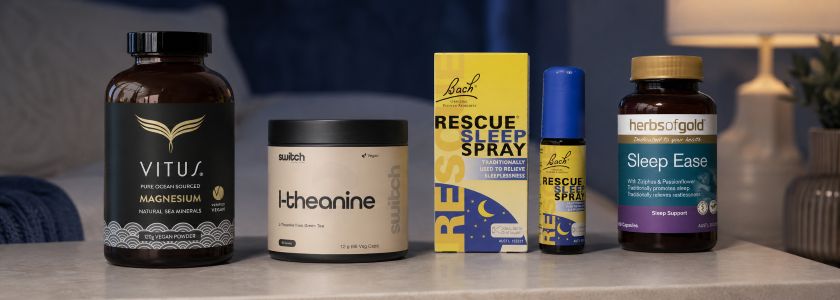
The Sleep Support range includes products with different ingredient profiles and delivery formats. Depending on the current range, these may include capsules, tablets, powders, sprays, single-ingredient products and multi-ingredient formulas.
Products may be built around minerals, amino acids or related compounds, herbal ingredients, or combinations of several ingredient types. The fact that two products appear in the same category does not mean they contain equivalent ingredients, quantities or directions.
How to Compare Sleep Support Supplements
A useful comparison starts with the complete product label rather than the product name, front-of-pack claims or the number of ingredients in the formula.
1. Check the Active Ingredients
Identify the active ingredients and the quantities supplied by the recommended serve. Combination formulas can contain several ingredients, so it is also worth checking whether any of them are already present in other supplements you use.
2. Compare the Recommended Serve
A stated ingredient amount may apply to one capsule, several capsules, multiple tablets or a measured scoop of powder. Compare the amount supplied by the actual recommended serve rather than comparing bottle size or front-label numbers alone.
3. Check the Directions and Timing
Products intended for an evening routine can have different directions for use. Follow the current label for the individual product rather than assuming that every sleep support supplement should be taken at the same time or in the same way.
4. Review the Warnings
Check age restrictions, pregnancy and breastfeeding advice, medicine-related warnings, allergen information and any other precautions shown on the label.
5. Consider the Format
Tablets and capsules may suit customers who prefer pre-measured servings, while powders or sprays may suit different routines. Format is mainly a practical consideration and does not by itself indicate that one product is more suitable than another.
Single-Ingredient or Combination Formula?
Neither approach is automatically better.
A single-ingredient product can make it easier to see exactly what you are taking and how much is provided per serve. A combination formula can place several ingredients into one product, but this makes it especially important to check quantities and ingredient overlap.
Before adding a multi-ingredient sleep formula to an existing supplement routine, compare all labels together. A multivitamin, mineral supplement, stress formula and sleep product may contain some of the same ingredients.
Magnesium and Sleep Support
Magnesium appears in some products sold within sleep and general wellness ranges, but magnesium supplements can use different forms, serving sizes and ingredient combinations.
Do not compare magnesium-containing products only by the large number shown on the front of the pack. Check the detailed ingredient panel to determine the magnesium form, the amount of magnesium provided by the recommended serve, other active ingredients and the directions for use.
If magnesium itself is your main focus, the Magnesium Supplement Guide explains magnesium forms, elemental magnesium, serving sizes and other label details in more depth.
Herbal Sleep Support Formulas
Herbal sleep support products may contain a single botanical ingredient or a combination of several herbal ingredients. Some formulas may also combine herbs with vitamins, minerals, amino acids or other complementary-medicine ingredients.
When comparing herbal formulas, check:
- the exact active ingredients;
- the amount of each ingredient where stated;
- the recommended serve;
- the product's labelled indications;
- directions for use; and
- warnings and suitability information.
Herbal products are not interchangeable simply because they contain the same plant or are marketed for a similar purpose. Extract type, ingredient quantity, formulation and labelled directions can differ between products.
More Ingredients Does Not Automatically Mean Better
A long ingredient list can look impressive, but ingredient count alone is not a useful measure of product suitability.
Instead, consider:
- what each ingredient is;
- how much is supplied per recommended serve;
- whether any ingredients duplicate other supplements;
- whether the formula matches what you are actually looking for; and
- what directions and warnings apply.
A simpler formula may sometimes be easier to compare, while a combination formula may suit someone who prefers several ingredients in one product. The complete label provides more useful information than ingredient count alone.
What Does an AUST L Number Mean?
Many complementary medicines supplied in Australia display an AUST L number on the label. AUST L medicines are listed in the Australian Register of Therapeutic Goods and are generally considered lower-risk medicines that use permitted ingredients and low-level indications.
AUST L medicines are not assessed by the Therapeutic Goods Administration for efficacy before they are supplied. Sponsors are responsible for certifying that applicable requirements are met, and the Therapeutic Goods Administration carries out regulatory and compliance activities.
The AUST number is useful information when reading a medicine label, but it should still be considered alongside the product's ingredients, indications, directions and warnings.
A Note About Melatonin in Australia
Melatonin is regulated as a medicine in Australia. Access depends on factors including the particular product, strength, intended use and the person for whom it is being considered.
Products advertised as melatonin supplements on international websites should not automatically be treated as equivalent to medicines legally supplied in Australia. Overseas products may not be regulated by the Therapeutic Goods Administration.
If you are considering melatonin, particularly for a child, for ongoing sleep problems or alongside other medicines, speak with a doctor or pharmacist about current Australian options and suitability.
Sleep Support and Stress
Stress and sleep can overlap, but sleep support and stress support should not automatically be treated as the same category.
If daytime stress, relaxation or coping with everyday pressures is your main focus, compare those products separately. The Stress Support Buying Guide explains common stress-support formula types and the label details worth comparing.
Consider Your Complete Supplement Routine
It is easy to assess products individually and overlook ingredients that appear across several supplements.
Before adding a sleep support product, consider whether you also use:
- a multivitamin;
- a magnesium supplement;
- a B-vitamin formula;
- a stress or relaxation product;
- an herbal formula; or
- another multi-ingredient supplement.
Check the ingredient panels together so you can identify repeated nutrients or other active ingredients. If you are unsure about combining products, ask a pharmacist, doctor or other suitably qualified health professional.
Sleep Habits Still Matter
Supplements should not be viewed as a replacement for healthy sleep habits or assessment of an ongoing sleep problem.
Practical sleep-hygiene measures can include:
- keeping regular sleep and wake times;
- maintaining a dark, quiet and comfortable bedroom;
- reducing screen use close to bedtime;
- limiting caffeine later in the day;
- maintaining regular physical activity; and
- developing a consistent wind-down routine.
Sleep difficulties can have many possible causes. If simple changes are not helping, seeking professional advice can be more useful than continuing to change supplements without understanding the underlying issue.
When to Speak With a Health Professional
Consider speaking with a doctor, pharmacist or other suitably qualified health professional if:
- sleep difficulties are ongoing, worsening or affecting daytime functioning;
- you regularly wake feeling unrefreshed;
- you suspect another health condition or medicine may be affecting your sleep;
- you are pregnant or breastfeeding;
- you take prescription or other medicines;
- you are considering combining several sleep or relaxation products;
- you are considering a sleep-related product for a child; or
- you are unsure whether a particular supplement is suitable for you.
Supplements should not be used to delay assessment of persistent or concerning sleep problems.
Frequently Asked Questions
What should I look for when buying a sleep support supplement?
Compare the active ingredients, quantities per recommended serve, serving directions, timing instructions, warnings, allergens and dietary suitability. Check the complete label rather than choosing only by product name or ingredient count.
Are all sleep support supplements basically the same?
No. Products can contain different ingredients and quantities and may come as capsules, tablets, powders, sprays or combination formulas. Their labelled indications, directions and warnings can also differ.
Is a product with more ingredients better?
Not necessarily. A longer ingredient list does not automatically make a product more suitable. Ingredient quantities, serving size, directions, warnings and your existing supplement routine are more useful points of comparison.
Can I take two sleep support supplements together?
Do not assume products can be combined simply because they are sold for a similar purpose. Check for duplicated ingredients and overlapping warnings. Seek professional advice where medicines or individual health circumstances may affect suitability.
Should I choose magnesium specifically for sleep?
Magnesium is included in some products within sleep-related ranges, but magnesium formulas vary considerably. If magnesium is your main focus, compare the magnesium form, amount supplied per serve, serving size, additional ingredients and current directions rather than assuming every magnesium product is specifically a sleep product.
Can sleep support supplements replace healthy sleep habits?
No. A regular sleep routine and suitable sleep environment remain important. Persistent sleep problems may require professional assessment rather than supplementation alone.
Can I buy melatonin as a normal supplement in Australia?
Melatonin is regulated as a medicine in Australia rather than simply being treated as an ordinary dietary supplement. Availability and supply requirements depend on the particular product and intended use. A doctor or pharmacist can provide advice about current Australian options.
When should I get help for ongoing sleep problems?
Seek professional advice if difficulty sleeping persists, becomes more severe, affects your mood or daytime functioning, or occurs alongside other symptoms or health concerns.
Further Information
- Healthdirect Australia — Insomnia — information about insomnia, sleep habits, possible causes, treatment options and when to speak with a doctor.
- Therapeutic Goods Administration — Regulation of melatonin products in Australia — information about Australian regulation and supply of melatonin products.
- Therapeutic Goods Administration — Listed medicines — information about AUST L medicines and the Australian regulatory framework for listed medicines.
- Therapeutic Goods Administration — AUST numbers on medicine labels — information about AUST L, AUST L(A) and AUST R identification numbers.
Important Information
This Guide provides general educational information to help customers compare sleep support products. It is not medical advice and is not intended to diagnose, treat, cure or prevent a medical condition. Individual needs, medicines and health circumstances can affect whether a particular product is appropriate.
Always read the label and follow the directions for use. Check ingredients, allergen information, warnings and suitability before purchase. If symptoms persist, if you have an existing health condition, take medicines, are pregnant or breastfeeding, or are unsure whether a product is suitable, seek advice from a qualified health professional.
Product formulas, directions and warnings can change. Always check the current product label before purchase and use.