
Herbal Teas: What to Know Before You Buy

Herbal teas can vary substantially in their ingredients, blend composition, tea-bag or loose-leaf format, serving directions and intended use. Some contain one botanical ingredient, while others combine several herbs, spices or other plant materials. Comparing the complete ingredient list and preparation directions is more useful than choosing a tea based only on its name or front-of-pack description.
This guide explains how to compare herbal teas by looking at botanical ingredients, single-herb and blended formulas, tea bags versus loose-leaf products, serving and preparation instructions, caffeine information where relevant, and current product labels.
What Is Herbal Tea?
Herbal tea generally refers to an infusion made from botanical materials other than traditional tea leaves alone. Depending on the product, ingredients may include leaves, flowers, roots, bark, seeds, fruits, spices or combinations of several plant materials.
You can browse the current Herbal Teas range to see how ingredients, blends and formats differ.
The word “tea” does not mean every product is formulated or regulated in the same way. Some products are sold as foods or beverages, while others may be presented for therapeutic use. In Australia, therapeutic goods and foods are separate regulatory categories, and how a product is represented, its ingredients and intended use can influence which framework applies.
Start With the Ingredient List
Begin by checking exactly which botanical ingredients are present. A herbal tea may contain one principal herb or a blend of several ingredients.
When comparing teas, check:
- the complete ingredient list;
- which herb or botanical is listed first;
- whether ingredient percentages are stated;
- whether the product is single-herb or blended;
- whether flavours, sweeteners or other ingredients are included; and
- the recommended preparation and serving directions.
If you are unfamiliar with botanical names and herbal ingredients, the Herbal Supplements Guide explains plant parts, botanical identity and combination formulas in more detail.
Single-Herb Teas vs Herbal Blends
A single-herb tea contains one principal botanical ingredient, while a blend combines several herbs or other plant materials.
Single-herb products can make it easier to identify what you are consuming. Blends may provide a broader flavour profile or combine several traditional botanical ingredients, but they require closer reading of the ingredient list.
When comparing a blend, check whether:
- the main herbs are clearly identified;
- ingredient quantities or percentages are supplied where applicable;
- the blend contains ingredients you already consume elsewhere;
- flavouring ingredients are included; and
- the preparation directions differ from other teas you use.
Tea Bags vs Loose-Leaf Herbal Tea
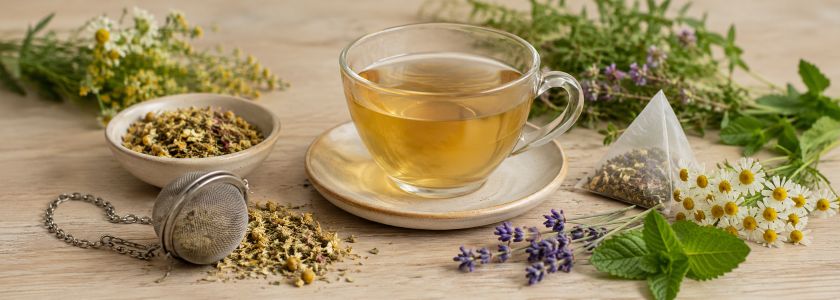
Herbal tea is commonly available in tea bags or as loose botanical material.
Tea bags provide pre-portioned servings and can be convenient when following standard steeping directions.
Loose-leaf or loose-herb tea requires measuring but may allow more control over the amount prepared, subject to the product directions.
Neither format is automatically stronger or better. Compare the actual ingredients, amount used per serving, preparation time and product directions rather than relying on the format alone.
Preparation Instructions Matter
The amount of botanical material used, water volume, water temperature and steeping time can all influence the finished drink.
Always follow the instructions supplied with the specific product. A preparation method suitable for one herbal tea should not automatically be applied to another.
Check:
- how much tea or how many tea bags make up one serving;
- the recommended volume of water;
- the stated steeping or infusion time;
- whether boiling or cooler water is recommended;
- how many servings are recommended; and
- whether the product has any special preparation or storage directions.
Check Which Part of the Plant Is Used
Herbal teas can be made from different parts of a plant, including leaves, flowers, roots, bark, fruit, peel, seeds or rhizomes.
This can matter because different plant parts are not necessarily equivalent. Two products sharing the same common herb name may use different botanical material or blends.
Where the label provides botanical or plant-part information, use it to understand the product more precisely.
Does Herbal Tea Contain Caffeine?
Many herbal teas are naturally caffeine-free, but this should not be assumed from the words “herbal tea” alone.
Some blends may contain ingredients that naturally provide caffeine, including traditional tea leaves such as green tea or black tea, or other caffeine-containing botanical ingredients.
If you are trying to limit caffeine, check the complete ingredient list and any caffeine information on the current label rather than relying solely on the product category or flavour name.
Herbal Tea and Green Tea Are Not Necessarily the Same
Green tea comes from Camellia sinensis, the same plant species used to produce black, white and oolong tea. It therefore differs from many herbal infusions made from other botanical species.
Products may also combine green tea with herbs, fruits or other ingredients, so check the complete formula when comparing blended teas.
This distinction is one reason a product-specific or green-tea-focused page should not automatically be treated as equivalent to a broad Herbal Teas Guide.
Food Products and Therapeutic Goods Can Be Different
In Australia, products supplied as foods are regulated differently from therapeutic goods. The Therapeutic Goods Administration advises that a product may be considered a therapeutic good when it is represented for therapeutic use or is likely to be taken for that purpose.
Herbal remedies supplied as medicines fall within therapeutic-goods regulation. Where a herbal tea is supplied as a therapeutic medicine, check the current label for the relevant Australian medicine identification information and directions.
Where a product is supplied as a food or beverage, its labelling and regulatory requirements differ. Do not assume that every herbal tea should carry an AUST number.
Understanding AUST Numbers Where Applicable
Medicines included in the Australian Register of Therapeutic Goods generally display an AUST identification number on their labels.
Depending on the regulatory pathway, you may see:
- AUST L — listed medicine;
- AUST L(A) — assessed listed medicine; or
- AUST R — registered medicine.
Most complementary medicines are listed medicines and carry an AUST L number. Listed medicines are not individually pre-market assessed by the TGA for efficacy, although they remain subject to regulatory requirements relating to ingredients, indications, manufacture, safety and quality.
The absence of an AUST number does not automatically indicate a problem if the product is legitimately supplied under a different regulatory framework, such as a food product.
Traditional Use and Scientific Evidence Are Different
Many herbs used in teas have histories of traditional use. This can help explain why a botanical is included in a product, but traditional use and modern scientific evidence are different forms of evidence.
The TGA requires medicines relying on traditional-use evidence to identify that distinction on relevant labels.
Research involving a particular herb, extract or preparation should also not automatically be applied to every tea blend containing that ingredient.
Check for Ingredient Overlap
Herbal teas can contain ingredients that also appear in capsules, tablets, powders, tonics or other supplements.
If you regularly use several herbal products, compare their ingredient lists so you understand whether the same botanical is being consumed in more than one form.
This is particularly relevant for multi-herb blends, where individual ingredients may be less prominent on the front of the package.
Safety and Medicine Interactions
Herbal ingredients can cause side effects and may interact with prescription medicines, over-the-counter medicines or other supplements. “Natural” does not automatically mean suitable for everyone.
If you take medicines, have a medical condition, are pregnant or breastfeeding, are preparing for surgery, or are uncertain whether a herbal tea is suitable for you, speak with a pharmacist, doctor or other appropriately qualified health professional before regular use.
This is especially important when a tea contains several active botanical ingredients or is presented for therapeutic use.
A Practical Herbal Tea Buying Checklist
- Which herbs are included? Check the complete ingredient list rather than the product name alone.
- Is it a single-herb tea or a blend? Multi-herb products require closer ingredient comparison.
- Which plant parts are used? Check leaf, flower, root, bark, fruit, seed or other stated material where relevant.
- Is it tea-bag or loose-leaf format? Consider convenience and how accurately the serving can be prepared.
- What are the preparation directions? Check water volume, steeping time and serving instructions.
- Does it contain caffeine? Do not assume every herbal or blended tea is caffeine-free.
- Are other ingredients included? Check flavours, sweeteners and additional botanicals where relevant.
- Is it supplied as a food or therapeutic medicine? Check the current label and regulatory information.
- Could the ingredients overlap with other products? Review supplements, teas and medicines you already use.
- What warnings apply? Always read the current product label before preparation and use.
Frequently Asked Questions
Are herbal teas caffeine-free?
Many are, but not all. Some blends contain green tea, black tea or other caffeine-containing ingredients. Check the complete ingredient list and any caffeine information on the current product label.
Is loose-leaf herbal tea better than tea bags?
Not necessarily. Loose-leaf and tea-bag products can contain the same or different botanical materials. Compare ingredients, serving amount and preparation directions rather than assuming one format is inherently better.
Can I steep herbal tea for longer to make it stronger?
Follow the preparation instructions supplied with the specific product. Longer steeping is not automatically appropriate for every botanical ingredient or blend.
Are herbal tea blends better than single-herb teas?
Neither is automatically better. Single-herb teas have a simpler ingredient profile, while blends combine several botanicals. The useful comparison is the actual formula, preparation directions and suitability for your circumstances.
Is green tea a herbal tea?
Green tea is produced from Camellia sinensis and differs botanically from many products commonly described as herbal infusions. Some herbal blends may nevertheless contain green tea as one ingredient.
Do herbal teas need an AUST number?
Not necessarily. A herbal tea supplied as a food is regulated differently from a product supplied as a therapeutic medicine. Medicines included in the Australian Register of Therapeutic Goods generally display the relevant AUST identification number.
Can herbal teas interact with medicines?
Yes. Some botanical ingredients can interact with medicines or may be unsuitable in particular circumstances. If you take prescription or over-the-counter medicines or have concerns about an ingredient, seek advice from an appropriately qualified health professional.
Further Information
- Therapeutic Goods Administration — What Are Therapeutic Goods?
- Therapeutic Goods Administration — Check if Your Health Product Is a Non-Prescription Medicine
- Therapeutic Goods Administration — Understanding Complementary Medicines
- Therapeutic Goods Administration — What's on My Medicine Label?
Important Information
This guide provides general information to help compare herbal tea ingredients, blends, formats, preparation directions and product labels. It is not intended to diagnose, treat, cure or prevent a medical condition and does not replace advice from a qualified health professional.
Herbal ingredients can cause side effects and may interact with prescription medicines, over-the-counter medicines and other supplements. If you take medicines, have a medical condition, are pregnant or breastfeeding, are preparing for surgery, or are uncertain whether a herbal tea is suitable for you, speak with an appropriately qualified health professional before use.
Always follow the preparation directions and warnings on the individual product label. Do not assume that products with similar names contain the same botanical ingredients, plant parts, serving amounts, caffeine content or preparation instructions.
Product formulas, directions and warnings can change. Always check the current product label before purchase and use.