
Ashwagandha Supplements: What to Know Before You Buy

Ashwagandha supplements can vary considerably in the part of the plant used, extract concentration, withanolide content, serving size and whether ashwagandha is the main ingredient or one component of a broader formula. Comparing the detailed ingredient panel is therefore more useful than choosing a product based only on the word “ashwagandha” on the front label.
This guide explains how to compare ashwagandha supplements by looking at botanical identity, plant part, extract type, withanolide information, serving amounts, combination formulas and current Australian safety information.
What Is Ashwagandha?
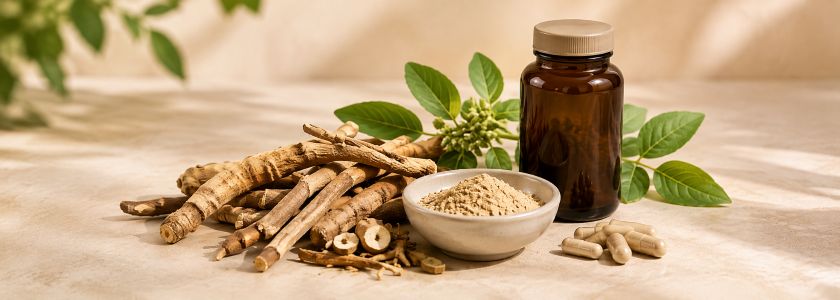
Ashwagandha is the common name for Withania somnifera, a botanical traditionally used in Ayurvedic medicine. Supplements may contain root material, leaf material, root extracts, root-and-leaf extracts or other preparations derived from the plant.
These differences matter because the chemical composition of the finished ingredient can vary depending on the plant part and extraction method. The TGA notes that most listed medicines in Australia use concentrated extracts derived from the root, while leaf material is less commonly used.
If you are new to comparing herbal products generally, the Herbal Supplements Guide explains botanical names, plant parts, extracts, equivalent amounts and combination formulas in more detail.
Start With the Botanical Name and Plant Part
Look for Withania somnifera in the active ingredient declaration rather than relying only on the common name “ashwagandha”.
Then check which part of the plant is being used. Depending on the product, the label may refer to:
- ashwagandha root;
- ashwagandha leaf;
- root and leaf material;
- a concentrated root extract; or
- another standardised preparation.
Two products carrying the same common name may therefore contain materially different preparations.
Understand Whole Herb and Extracts
A powdered herb and a concentrated extract are not directly interchangeable. Extracts are produced by processing the plant material to concentrate selected constituents, while whole-herb powders contain a broader range of naturally occurring plant material.
Labels may state:
- the physical amount of extract used;
- an amount equivalent to a larger quantity of dry herb;
- an extraction ratio;
- the plant part used; and
- a stated level of particular constituents such as withanolides.
Do not assume that the largest milligram figure on the label represents the most concentrated or most appropriate product.
What Are Withanolides?
Withanolides are naturally occurring compounds found in Withania somnifera. Different plant parts and different extracts can contain different withanolide profiles and concentrations.
Some products state the amount or percentage of total withanolides, while others may not display this information prominently.
When comparing products, ask:
- Does the label state the withanolide content?
- Is the amount shown per capsule, tablet or full recommended serving?
- Is the product standardised to a particular level of withanolides?
- Does the declaration refer to root, leaf or a combination?
- Is the product a single-ingredient ashwagandha formula or a broader blend?
A higher withanolide percentage should not automatically be interpreted as better. The complete preparation, serving size, directions and warnings still need to be considered.
Compare the Recommended Serving
Ashwagandha products can provide very different amounts per capsule, tablet, scoop or serving. Some labels also express extract equivalents, which can make direct comparison difficult.
Check:
- how much extract or herb is present in each unit;
- how many units make up the recommended serving;
- how often the product is directed to be used;
- any stated dry-herb equivalent;
- any declared withanolide amount; and
- the complete recommended daily intake shown on the label.
Always compare the full recommended serving rather than one capsule from one product against the daily serving from another.
Single-Ingredient Ashwagandha vs Combination Formulas
Some products are centred primarily on ashwagandha, while others include it alongside additional herbal extracts, vitamins, minerals or other active ingredients.
This distinction is important because a combination formula containing ashwagandha should not automatically be treated as equivalent to a dedicated ashwagandha supplement.
When comparing a blend, check:
- how much ashwagandha is actually present;
- whether the plant part and extract are identified;
- whether withanolide information is supplied;
- what other active ingredients are included; and
- whether any ingredients overlap with supplements you already use.
Ashwagandha also appears in products marketed around broader purposes such as stress, adrenal support, performance, multinutrient formulas and general wellness. Judge the complete formula rather than the presence of one familiar ingredient.
Traditional Use and Modern Evidence Are Different
Ashwagandha has a long history of traditional use, particularly within Ayurvedic medicine. Traditional-use information can help explain why a botanical is included in certain products, but it should not be treated as the same thing as modern clinical evidence.
Research on ashwagandha has used a variety of preparations, doses and study designs. This makes it difficult to apply findings from one specific extract or formulation to every product containing Withania somnifera.
NCCIH notes that some research suggests certain ashwagandha preparations may be useful for stress or insomnia, while evidence for many other promoted uses remains limited or unclear. This is another reason to avoid assuming that all ashwagandha products are interchangeable.
Current Australian Safety Information
The Therapeutic Goods Administration has issued updated safety information for medicines and herbal supplements containing Withania somnifera. The TGA advises that these products may cause acute gastrointestinal reactions in some people and may be associated with liver injury in very rare cases.
The TGA advises consumers to stop taking the product and seek medical advice if they develop symptoms such as:
- yellowing of the skin or eyes;
- dark urine;
- nausea or vomiting;
- unusual tiredness or weakness;
- stomach or abdominal pain; or
- loss of appetite.
The TGA also advises that people who currently have or have previously had liver problems should avoid medicines and herbal supplements containing Withania somnifera.
Sudden vomiting or diarrhoea can also occur after one or two doses in some people. If this happens, stop use and seek medical assessment.
Check Pregnancy, Breastfeeding and Medicine Interactions
Ashwagandha is not appropriate for everyone. NCCIH advises avoiding it during pregnancy and breastfeeding and notes potential interactions with several types of medicines, including medicines used for diabetes, blood pressure, immune suppression, seizures, sedation and thyroid conditions.
People with thyroid or autoimmune disorders, those preparing for surgery, and anyone using prescription or over-the-counter medicines should seek advice from a suitably qualified health professional before considering an ashwagandha supplement.
Always check the current Australian product label because required warnings and directions can differ between preparations.
A Practical Ashwagandha Buying Checklist
- Is the botanical name stated? Look for Withania somnifera.
- Which plant part is used? Check whether the product uses root, leaf or a combination.
- Is it whole herb or an extract? Do not directly compare whole-herb milligrams with concentrated extract amounts.
- Are withanolides stated? Check whether the formula provides a declared amount or percentage.
- What does the full serving provide? Compare complete recommended servings rather than single capsules.
- Is ashwagandha the main ingredient? In combination formulas, check how prominent it actually is.
- Are other active ingredients included? Check for overlap with supplements you already use.
- What warnings apply? Read the current label carefully, especially current Australian safety information.
- Do you use medicines or have relevant health conditions? Seek professional advice where appropriate.
Frequently Asked Questions
Is ashwagandha the same as Indian ginseng?
“Indian ginseng” is sometimes used as a common name for ashwagandha, but ashwagandha is Withania somnifera and is not the same plant as true ginseng species such as Panax ginseng.
Is ashwagandha root better than root-and-leaf extract?
Not automatically. Root, leaf and combined preparations can differ in their constituent profiles and concentrations. Compare the actual extract, plant part, withanolide information, serving amount and label directions rather than assuming one form is universally preferable.
What does standardised withanolide content mean?
It means the extract has been produced to provide a specified level of withanolides. Check whether the percentage or amount refers to the extract itself or to the complete recommended serving.
Does a higher withanolide percentage mean a better product?
No. A higher percentage is only one characteristic of the formula. Plant part, extract type, serving amount, directions, warnings and the complete ingredient profile also matter.
Can ashwagandha cause side effects?
Yes. Reported effects include gastrointestinal symptoms such as nausea, vomiting and diarrhoea. The TGA also advises that liver injury may occur in very rare cases. Stop use and seek medical advice if concerning symptoms develop.
Can people with liver problems take ashwagandha?
The TGA advises that people who currently have or have previously had liver problems should avoid medicines and herbal supplements containing Withania somnifera.
Can ashwagandha be used during pregnancy or breastfeeding?
NCCIH advises that ashwagandha should be avoided during pregnancy and should not be used while breastfeeding. Always follow the current product label and seek professional advice where appropriate.
Can I take ashwagandha with other supplements or medicines?
That depends on the full formula and your circumstances. Ashwagandha may interact with some medicines, and it can also appear in multi-ingredient supplements. Check for ingredient overlap and speak with a pharmacist, doctor or other appropriately qualified health professional if you use medicines or are uncertain about combining products.
Further Information
- Therapeutic Goods Administration — Herbal Preparations Containing Withania somnifera (Withania, Ashwagandha)
- Therapeutic Goods Administration — Withania somnifera (Ashwagandha) and Very Rare Risk of Liver Injury
- National Center for Complementary and Integrative Health — Ashwagandha: Usefulness and Safety
Important Information
This guide provides general information to help compare ashwagandha supplement ingredients, extracts, serving information and labels. It is not intended to diagnose, treat, cure or prevent a medical condition and does not replace advice from a qualified health professional.
Medicines and herbal supplements containing Withania somnifera may cause gastrointestinal side effects and have been associated with liver injury in very rare cases. The TGA advises people with current or previous liver problems to avoid these products and to stop use and seek medical advice if symptoms that may indicate liver injury occur.
Ashwagandha may also be unsuitable during pregnancy or breastfeeding and may interact with some medicines. If you take prescription or over-the-counter medicines, have a medical condition, are preparing for surgery, or are uncertain whether a product is suitable for you, speak with an appropriately qualified health professional before use.
Always follow the directions and warnings on the individual product label. Do not assume that products containing ashwagandha have the same plant part, extract, withanolide content, serving size or suitability.
Product formulas, directions and warnings can change. Always check the current product label before purchase and use.